



The 2024 International Energy Conservation Code (IECC) is the International Codes Council’s most recent set of recommendations for states and localities. These codes, if adopted in full, could add $8,100–$21,200 in total up-front construction costs per new home, as compared to the 2006 IECC. That cost translates into approximately $26–$92 more per month in a household’s mortgage payment.
DOE analyzed each of the 2024 IECC individual upgrade measures—the specific home upgrades or products intended to reduce energy consumption—to provide greater transparency to policymakers and consumers about which IECC elements drive up costs the most. DOE also looked at how long it would take to pay back the added cost through lower utility bills from energy savings.
The results for individual measures vary dramatically. Some upgrades, such as improving the air sealing of a home to prevent leaks, are extremely cost effective and can take as few as three years to pay back. Other measures deliver less energy savings and, in some cases, would take longer to pay back than the life of the products involved. Costs and payback periods can also have large ranges because they depend on choice of fuel and equipment types. Also, the effects of individual measures differ across climate zones.
DOE’s analysis provides details on the highest-cost measures so that state and local officials who adopt building codes have more data to carefully review the costs and impacts of adopting the 2024 IECC for their communities.
Where does the 2024 IECC increase costs?
Household costs for key energy measures (2024 vs. 2006 IECC)
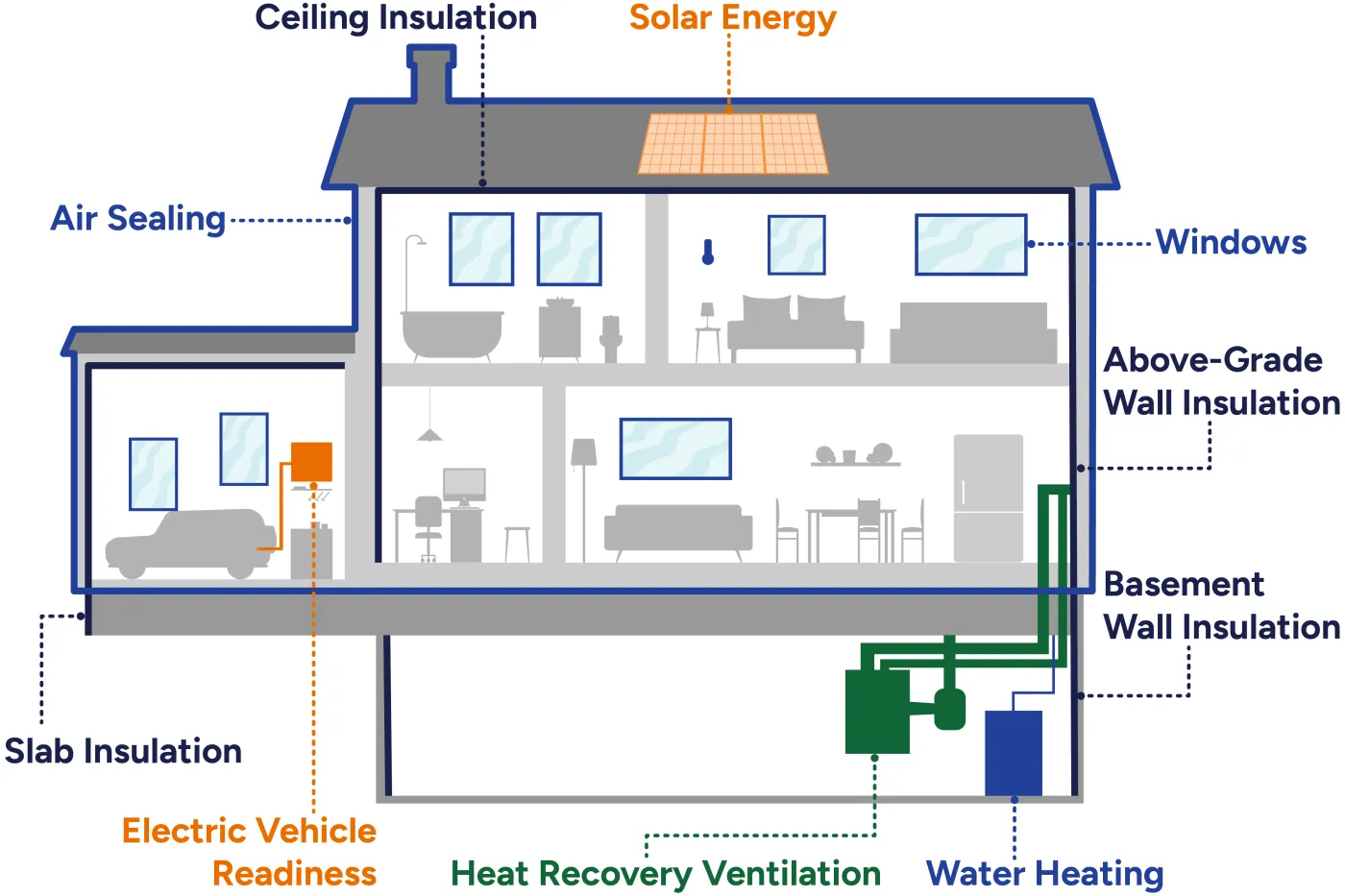
Air sealing is the process of closing gaps in a building's outer shell to stop unwanted airflow. In cold weather, for example, air sealing stops warm air from leaking out or cold air from leaking in. In the 2024 IECC, it means creating a tighter structure with less air leakage compared with 2006 requirements.
- Incremental Cost: $2,600–$4,700
- Energy Cost Savings: $93–$1,882 per year
- Payback Period: 2.4–41 years
- Measure Life: 60 years
Electric vehicle readiness means that a home has the electrical wiring to support an electric vehicle charging station in the future. This is a new, optional measure in the 2024 IECC.
- Incremental Cost: $780
- Energy Cost Savings: N/A
- Payback Period: N/A
- Measure Life: N/A
Heat recovery ventilation is a home ventilation system that exchanges stale indoor air for fresh outdoor air while saving most of the heat energy. This is a new, optional measure in the 2024 IECC, which suggests using a system that captures 65% of the thermal energy from outgoing stale air and reuses it to condition incoming fresh air.
- Incremental Cost: $2,100
- Energy Cost Savings: $30–$35 per year
- Payback Period: 61–71 years
- Measure Life: 20 years
New, optional measures in the 2024 IECC recommend more energy-efficient water heating systems, including instantaneous gas or electric heat pump water heating systems.
- Incremental Cost: $1,000–$2,900
- Energy Cost Savings: $48–$370 per year
- Payback Period: 7.7–21 years
- Measure Life: 12 years
Above-grade wall insulation is material added above ground level to a building's walls to help keep heat inside in cold weather or outside in hot weather. The 2024 IECC recommends using thicker or higher‑rated insulation than the 2006 requirements, so homes lose less energy through their walls.
- Incremental Cost: $2,700–$7,500
- Energy Cost Savings: $103–$194 per year
- Payback Period: 21–47 years
- Measure Life: 60 years
Basement wall insulation is a thermal barrier installed against foundation walls. The 2024 IECC requires using thicker or higher‑rated insulation than previous versions of the IECC, to reduce energy losses through basement walls. This insulation was not required in the 2006 IECC but was added to versions of the code in subsequent years.
- Incremental Cost: $1,500–$2,500
- Energy Cost Savings: $24–$140 per year
- Payback Period: 18–63 years
- Measure Life: 60 years
Ceiling insulation is a material typically placed above the living space in a home—often in the attic—to help keep heat inside or outside. The 2024 IECC requires using thicker or higher‑rated insulation than 2006 requirements, so the home loses less energy through the roof.
- Incremental Cost: $600–$880
- Energy Cost Savings: $12–$18 per year
- Payback Period: 35–58 years
- Measure Life: 60 years
Slab insulation is a thermal barrier installed around or beneath a concrete foundation floor to stop heat exchange with the ground. The 2006 IECC did not require slab insulation, which was added in subsequent years. The 2024 IECC requires installing perimeter slab insulation down to a depth of 2–4 feet.
- Incremental Cost: $600–$1,200
- Energy Cost Savings: $3–$15 per year
- Payback Period: 81–200 years
- Measure Life: 60 years
Solar energy in the 2024 IECC means installing a 4 kilowatt or larger photovoltaic system for a typical single-family home. This is a new, optional measure in the 2024 IECC.
- Incremental Cost: $14,000
- Energy Cost Savings: $227–$1,066 per year
- Payback Period: 13–62 years
- Measure Life: 20 years
The 2024 IECC requires installing higher-performance windows that more effectively block heat from escaping in the winter or entering in the summer compared with 2006 requirements.
- Incremental Cost: $680–$1,800
- Energy Cost Savings: $70–$160 per year
- Payback Period: 4.7–20 years
- Measure Life: 25 years
DOE’s analysis is based on a two-story home with 2,400 square feet, the current average size of an American home. Additional features include ceilings 8.5 feet high, windows covering 15% of the exterior, various heating systems, and central electric air conditioning. Additional analysis details are available at the bottom of Impacts of Residential Building Energy Codes and on Energy and Cost Analysis Methodology.