



The U.S. Department of Energy (DOE) supports the development of commonsense building energy codes that safeguard affordability and consumer choice. Recent DOE analysis finds that new building codes, such as the 2024 International Energy Conservation Code (IECC), excessively raise the upfront cost of building or purchasing a home.
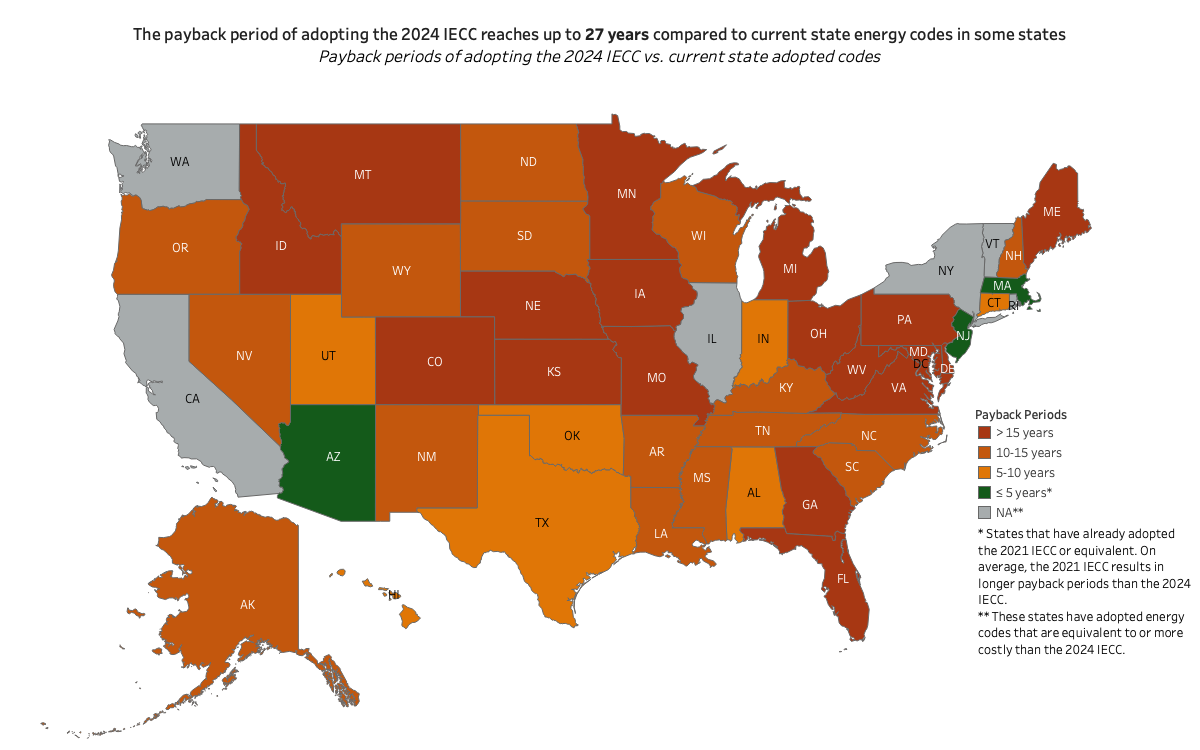
If adopted nationwide, the 2024 IECC would drive up new construction costs for households across the U.S. by over $127 billion compared to 2006 levels.
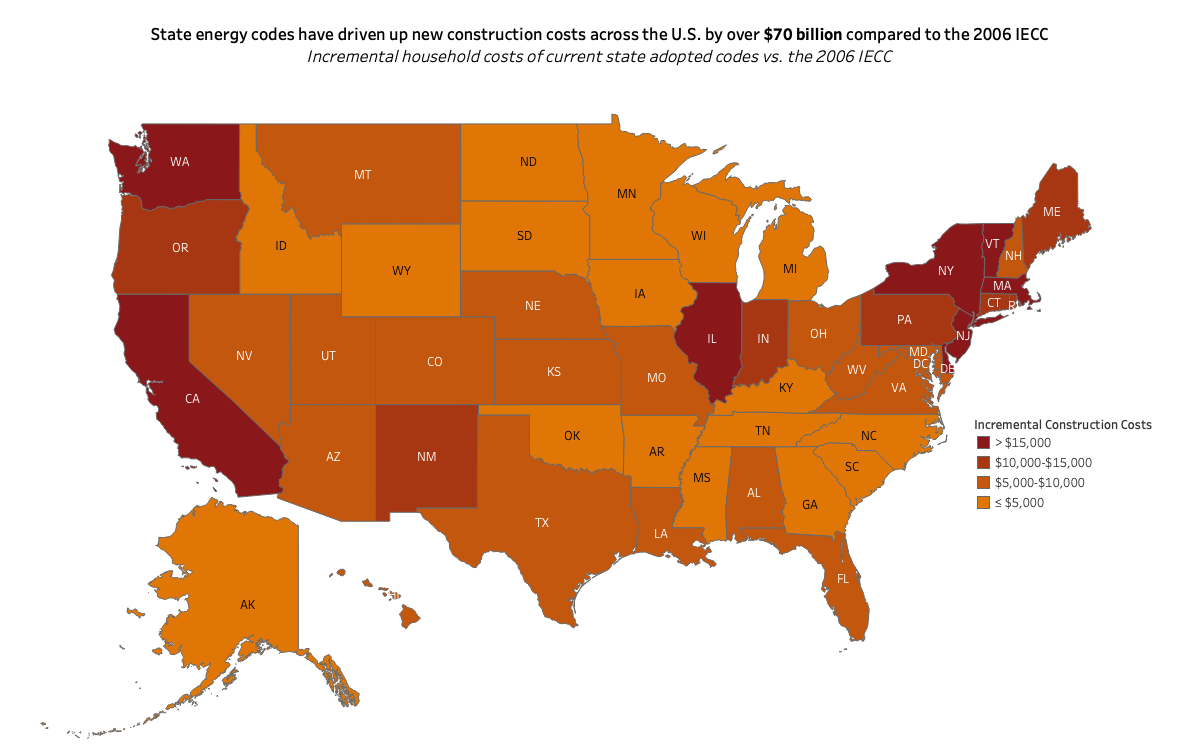
- Currently adopted state energy codes have already driven up the cost of new construction by $70 billion since 2006.
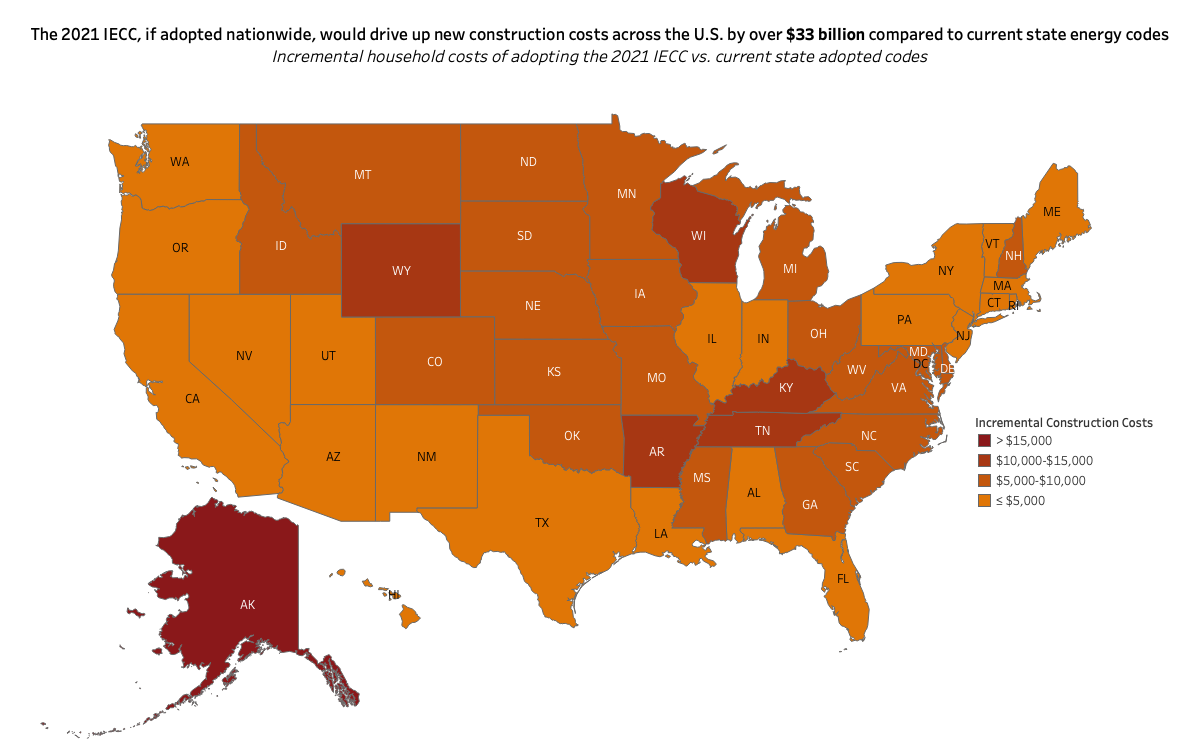
- The 2024 IECC, if adopted by all U.S. states, would raise new construction costs by an additional $57 billion compared to current state codes.
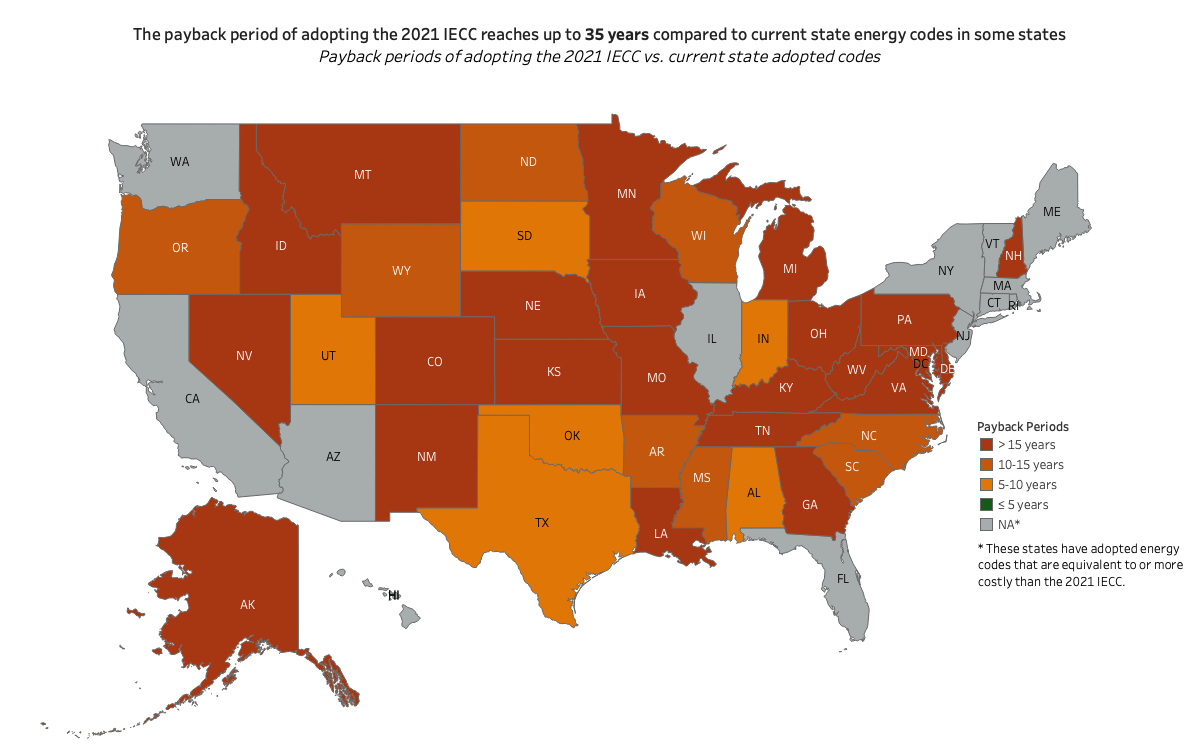
Recouping these costs through energy savings can take longer than the average homeowner owns their home. To relieve American households of this growing burden, DOE supports transparent, affordable, fuel-neutral building codes with reasonable payback periods.
DOE is currently reviewing the methodology by which it evaluates the national and state-level impact of building energy codes. Stakeholders are invited to respond to DOE’s Request for Information (RFI) by August 3, 2026.
Click on each map below for an interactive version with additional detail
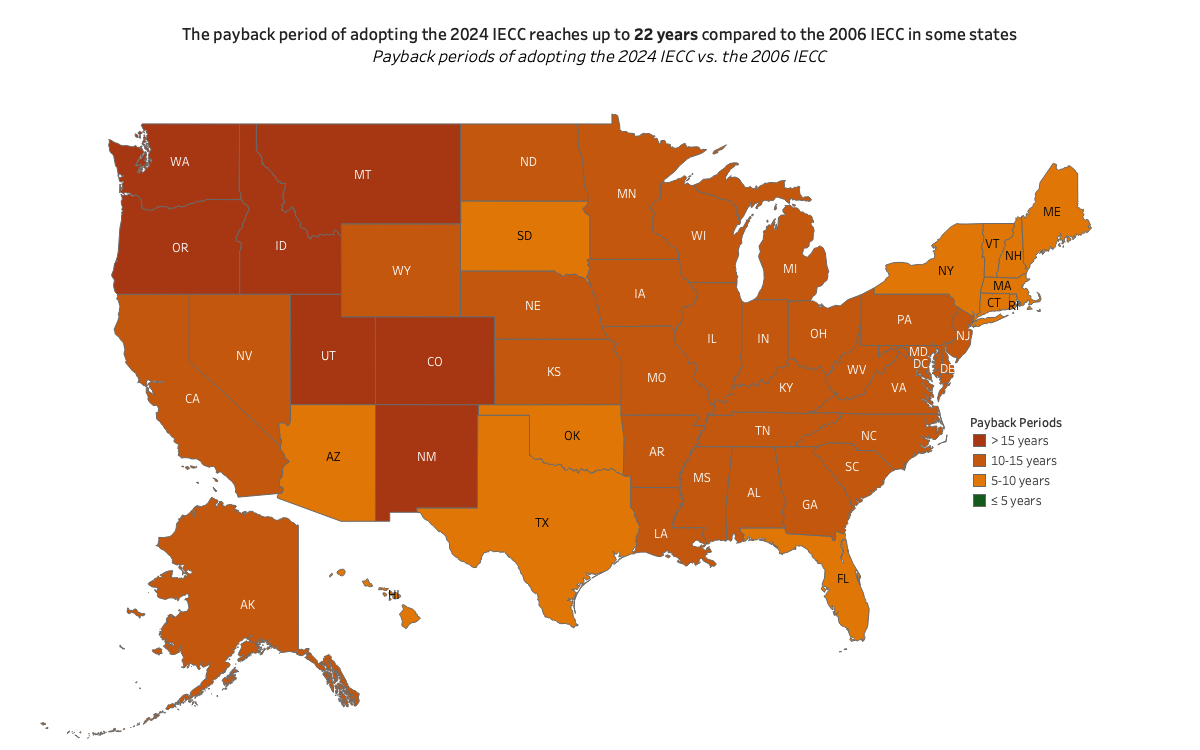
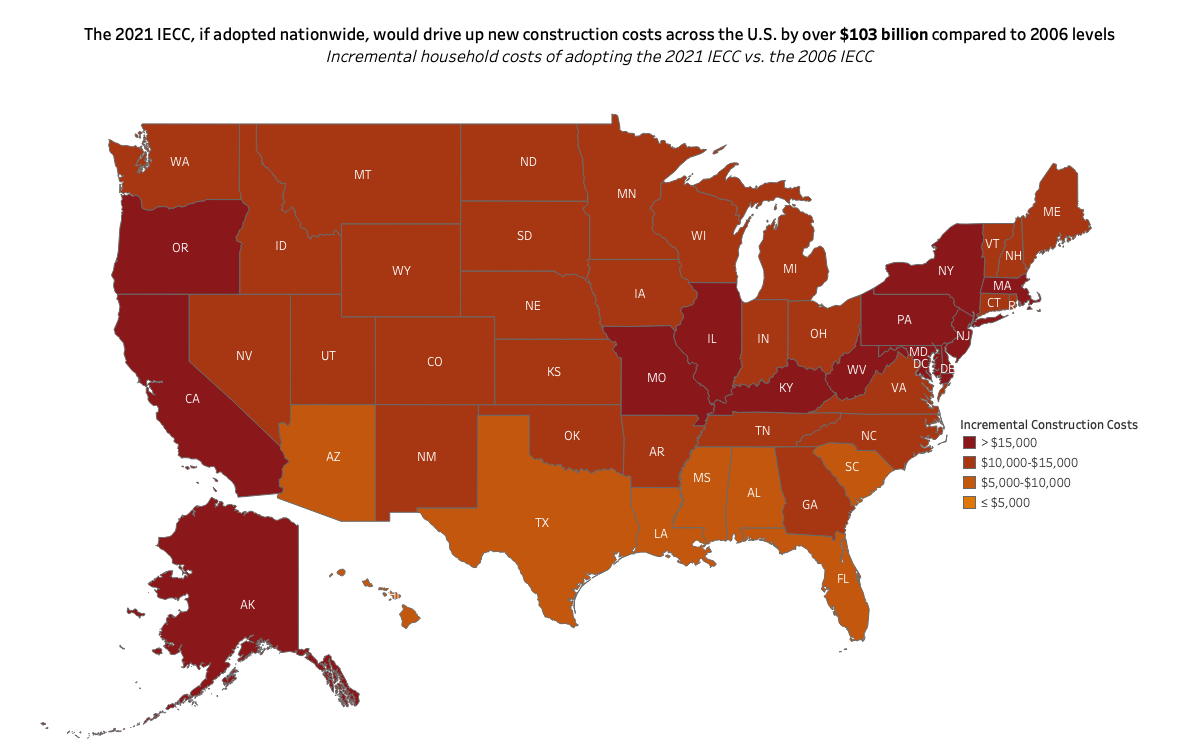
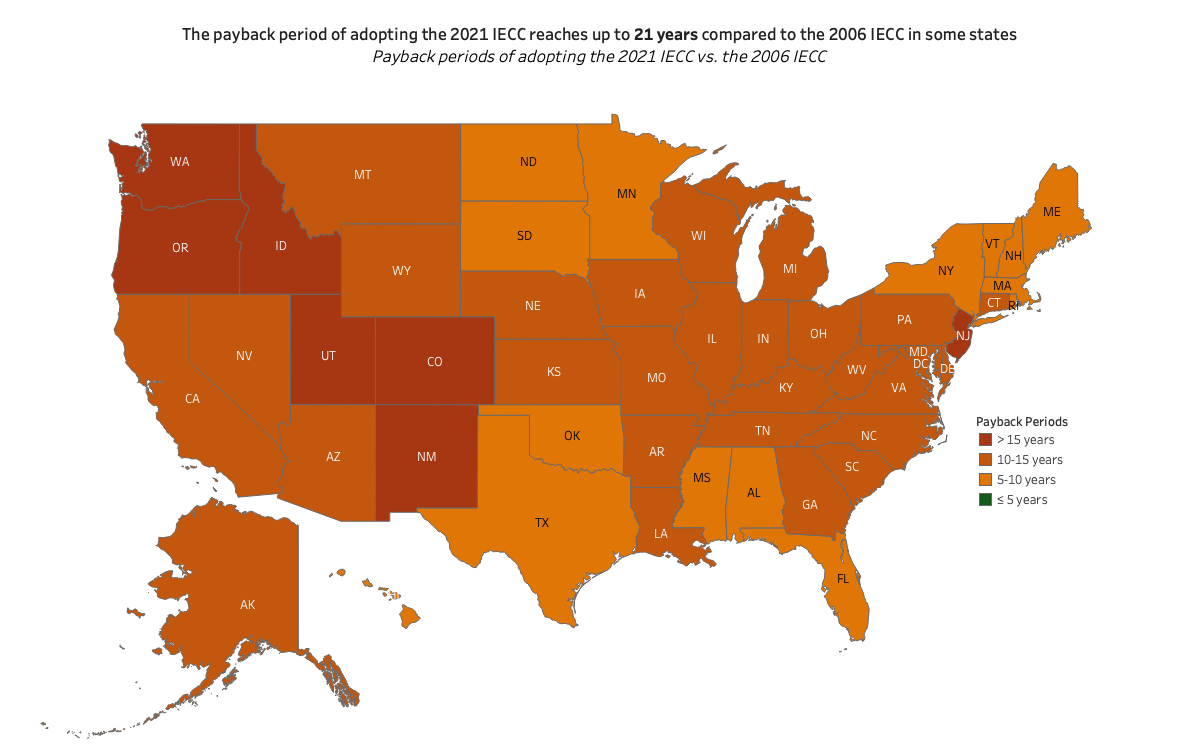
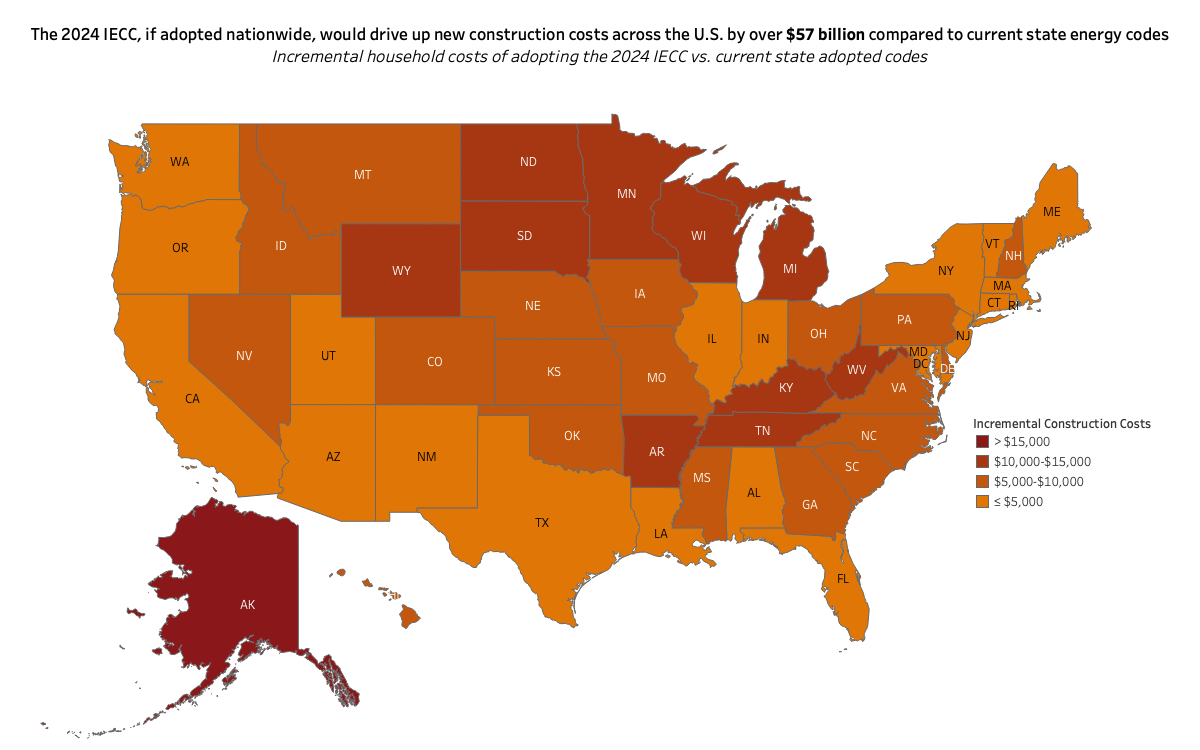
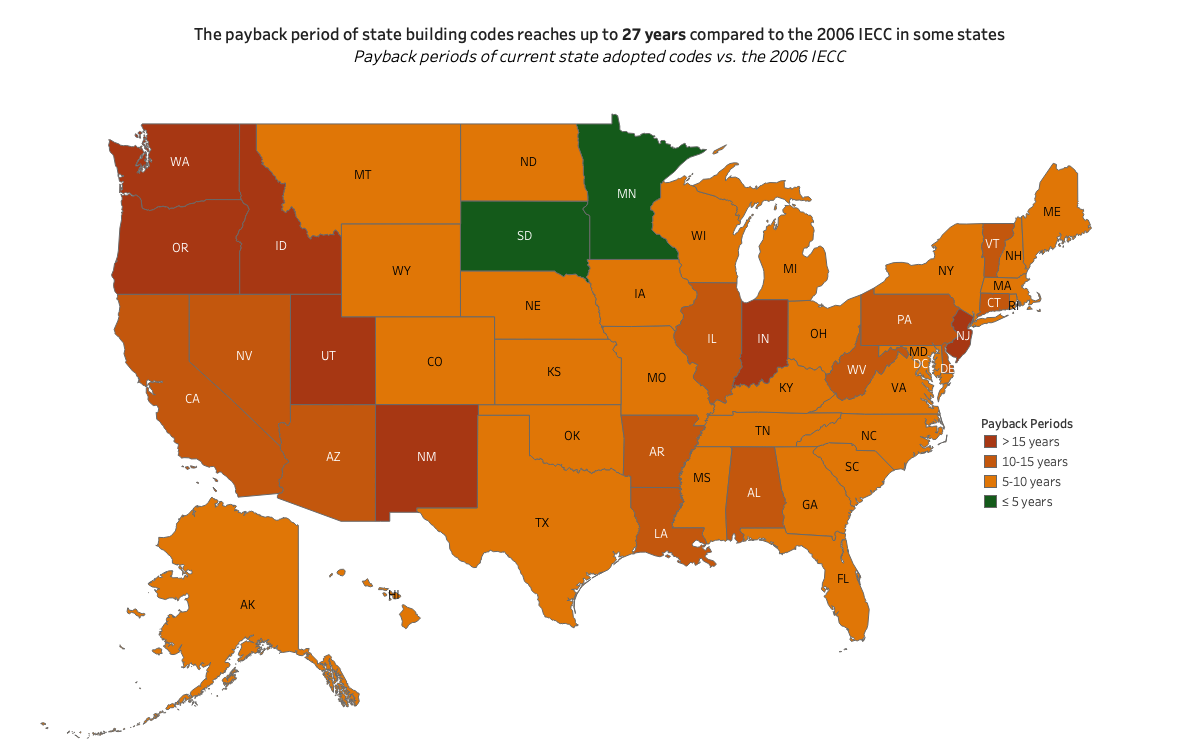
Methodology
DOE has updated its cost analysis for single-family homes, quantifying the impact on states adopting the 2024 IECC compared to 2006 levels, as well as to the 2021 IECC and currently adopted state codes. The analysis was conducted using the established DOE Methodology, including the DOE single-family prototype building models, and mapped across the 50 states representing all U.S. climate zones. Incremental construction costs were developed based on past analyses, where applicable, with historical data updated to reflect current costs based on the Consumer Price Index (CPI) and supplemented by newly developed cost data. The procedure for calculating the costs was consistent with the DOE methodology, including the selection of economic parameters representative of recent market conditions.
Specific updates include:
- Updated measure-level construction cost estimates based on the most recent data from various sources, including RS Means, National Laboratory of the Rockies, and specialized data collected through construction cost estimating firms.
- Updated contractor overhead and profit (OH&P) margins of 17% and builder OH&P margins of 15%.
- Updated economic parameters (e.g., mortgage and discount rates) and most recent state-level parameters (e.g., fuel prices for electricity, natural gas, and residential fuel oil) available from the Energy Information Agency (EIA).
The analysis compared the added household construction cost for the 2024 IECC to the 2006 IECC and the code currently adopted by each state. To calculate cumulative statewide costs, household costs were multiplied by single-family construction starts and aggregated over a 20-year analysis period.
DOE is currently reviewing the methodology by which it evaluates the cost impacts of building energy codes, through an active RFI. The Department intends to publish its updated methodology and comprehensive cost analysis once the RFI process is complete.